






Learn more
These promotions will be applied to this item:
Some promotions may be combined; others are not eligible to be combined with other offers. For details, please see the Terms & Conditions associated with these promotions.
Your Memberships & Subscriptions
Download the free Kindle app and start reading Kindle books instantly on your smartphone, tablet, or computer - no Kindle device required.
Read instantly on your browser with Kindle for Web.
Using your mobile phone camera - scan the code below and download the Kindle app.
Follow the authors
OK
The Courage to Be (The Terry Lectures Series) Subsequent Edition, Kindle Edition
Originally published more than fifty years ago, The Courage to Be has become a classic of twentieth-century religious and philosophical thought. The great Christian existentialist thinker Paul Tillich describes the dilemma of modern man and points a way to the conquest of the prob-lem of anxiety. This edition includes a new introduction by Harvey Cox that situates the book within the theological conversation into which it first appeared and conveys its continued rele-vance in the current century.
"The brilliance, the wealth of illustration, and the aptness of personal application…make the reading of these chapters an exciting experience."—W. Norman Pittenger, New York Times Book Review
"The essential character of courage, for Tillich, is "in spite of." We must go on striving for freedom, justice, and our faith in spite of oppositions. In this age of late capitalism, globalization, and terrorism, we all need the virtue of courage as Harvey Cox admirably argues in the foreword."—Nimi Wariboko, Andover Newton Theological School, Newton Centre, MA
"Tillich struggled with the existential question how we may overcome the demoralizing effects, on the individual and society, of our Age of Anxiety. In this, his most popular book, Tillich gives us his deeply thought answers, and Harvey Cox provides a helpful new introduction."—Gerald Holton, Harvard University
- ISBN-13978-0300170023
- EditionSubsequent
- PublisherYale University Press
- Publication dateOctober 1, 2008
- LanguageEnglish
- File size4.0 MB
See all supported devices
Kindle E-Readers
- Kindle
- Kindle Touch
- Kindle Colorsoft Signature Edition
- Kindle Oasis (10th Generation)
- Kindle Paperwhite
- Kindle Scribe (3rd Generation)
- Kindle Scribe, 1st generation (2024 release)
- Kindle (10th Generation)
- Kindle Paperwhite (12th Generation)
- Kindle Scribe (1st Generation)
- All New Kindle E-reader (11th Generation)
- Kindle Scribe Colorsoft (1st Generation)
- All new Kindle paperwhite
- Kindle Voyage
- Kindle Paperwhite (10th Generation)
- Kindle Oasis (9th Generation)
- Kindle Oasis
- All New Kindle E-reader
- Kindle Paperwhite (11th Generation)
- Kindle (11th Generation, 2024 Release)
- Kindle Paperwhite (5th Generation)
Fire Tablets
- Fire HD 8 (12th Generation)
- Fire 7 (9th Generation)
- Fire HD 8 (12th Generation)
- Fire Max 11 (13th Generation)
- Fire 10 HD (13th Gen)
- Fire HD 10 Plus
- Fire 7 (12th Generation)
- Fire HD 8 (8th Generation)
- Fire HD 10 (9th Generation)
- Fire HD 8 (10th Generation)
- Fire HD 10 (11th Generation)
Free Kindle Reading Apps
- Kindle for Android Phones
- Kindle for Android Tablets
- Kindle for iPhone
- Kindle for PC
- Kindle for iPad
- Kindle for Web
- Kindle for Mac
Shop this series
See full series- Kindle Price:EUR 54.39-By placing your order, you're purchasing a license to the content and you agree to the Kindle Store Terms of Use.
- Kindle Price:EUR 88.06-By placing your order, you're purchasing a license to the content and you agree to the Kindle Store Terms of Use.
- Kindle Price:EUR 165.06-By placing your order, you're purchasing a license to the content and you agree to the Kindle Store Terms of Use.
- Kindle Price:EUR 275.56-By placing your order, you're purchasing a license to the content and you agree to the Kindle Store Terms of Use.
Shop this series
This option includes 3 books.
This option includes 5 books.
This option includes 10 books.
This option includes 18 books.
Why can't I get these titles?
Under state law, teens need a parent or guardian to buy or borrow titles. Ask your parent or guardian to acquire these titles for this account from their device. These books will appear in your Kindle library once they do.
Customers who viewed this item also viewed
Customers also bought or read
- The Cambridge Companion to Paul Tillich (Cambridge Companions to Religion)
Kindle EditionEUR30.34EUR30.34 - Love, Gravity, and God: Paul Tillich and the Existential Depths of Reason and Religion
Kindle EditionEUR8.63EUR8.63 - Jesus for the Non-Religious: Recovering the Divine at the Heart of the Human
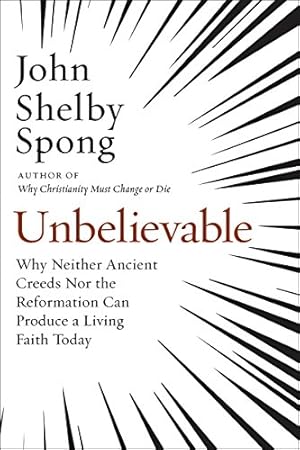
Kindle EditionEUR6.04EUR6.04 - Unbelievable: Why Neither Ancient Creeds Nor the Reformation Can Produce a Living Faith Today
Kindle EditionEUR11.22EUR11.22 - Spiritual Writings: A New Translation and Selection (Harper Perennial Modern Thought)
Kindle EditionEUR2.58EUR2.58 - The Kingdom of Heaven Within You - Volume 1: The Teachings of Meister Eckhart (Translated)
Kindle EditionEUR2.58EUR2.58 - Meeting Jesus Again for the First Time: The Historical Jesus and the Heart of Contemporary Faith
Kindle EditionEUR6.04EUR6.04 - The Universal Christ: How a Forgotten Reality Can Change Everything We See, Hope For, and Believe
Kindle EditionEUR11.22EUR11.22 - Ego and Archetype: Individuation and the Religious Function of the Psyche (C. G. Jung Foundation Books Series Book 4)
Kindle EditionEUR20.71EUR20.71
Editorial Reviews
From the Inside Flap
About the Author
Product details
- ASIN : B004INHHBA
- Publisher : Yale University Press
- Accessibility : Learn more
- Publication date : October 1, 2008
- Edition : Subsequent
- Language : English
- File size : 4.0 MB
- Screen Reader : Supported
- Enhanced typesetting : Enabled
- X-Ray : Not Enabled
- Word Wise : Enabled
- Print length : 242 pages
- ISBN-13 : 978-0300170023
- Page Flip : Enabled
- Part of series : The Terry Lectures
- Best Sellers Rank: #373,898 in Kindle Store (See Top 100 in Kindle Store)
- #53 in Existentialism
- #95 in Existentialist Philosophy
- #199 in Religious Studies - Philosophy
- Customer Reviews:
About the authors

Discover more of the author’s books, see similar authors, read book recommendations and more.

Discover more of the author’s books, see similar authors, read book recommendations and more.
Customer reviews
Customer Reviews, including Product Star Ratings help customers to learn more about the product and decide whether it is the right product for them.
To calculate the overall star rating and percentage breakdown by star, we don’t use a simple average. Instead, our system considers things like how recent a review is and if the reviewer bought the item on Amazon. It also analyzed reviews to verify trustworthiness.
Learn more how customers reviews work on AmazonTop reviews from the United States
There was a problem filtering reviews. Please reload the page.
- Reviewed in the United States on December 28, 2017Format: KindleVerified PurchaseA most important book which summarizes the problems for belief and faith after the post-Nietzschean fallout of orthodox religion. Tillich's entire work is existentially based, and attempts to salvage something, anything, of value from the pre-modern age of the ancient regime, as it is often called. We might call it the age of calcified dogma and hierarchy. What remains of man's allegiance to Judeo-Christian tenets? Does anything relevant remain from 2,000 years of dogmatism and fundamentalism? Or have the black-robes and fish-heads had their day?
We must bear in mind, however, that almost everything Tillich, for all his greatness, deals with was already expounded in greater depth by German philosopher Martin Heidegger. It is therefore scurrilous that the introduction of this book, by Peter Gomer, never mentions this great, all-important thinker.
Tillich's work is nothing less than a footnote to Heidegger, and yet the latter gets only a handful of brief mentions in the text, none in the introduction. One reels in shock, until they realize that this omission simply confirms the outrageous inbreeding of American academia, underlining the fact that the bastions of education (and publishing) in the west are infested with open and closet Marxists and Postmodernists. There is no name dirtier among this brood than Heidegger's. So the work of Tillich will always be highlighted and celebrated over his. Be sure of that.
With this in mind, I refer readers of this book to the works of Martin Heidegger, and his better commenters, like Richard Capobianco, etc.
*** *** ***
- Reviewed in the United States on November 30, 2014Format: KindleVerified PurchaseIn college and seminary in the 1960s I was totally enamored with Paul Tillich. I read everything by him and about him that I could get my hands on. He seemed to me to provide a workable and beautiful philosophy which illuminated the symbolic and moral value of the Bible. I felt that more than any other theologian he helped us see the relevance of the Bible's teaching about faith. When Hannah Tillich's book "From Time to Time" came out, I was so disgusted that I got rid of all my books by Paul Tillich. Recently, I have started reading his works again. He was an intellectual giant. More than anyone else, he has helped us to see past the historical inaccuracies of the Bible and still treasure the symbolic meaning. He also opened the door to an appreciative understanding of diverse religions. "The Courage to Be" is the best place to begin reading Tillich. Several friends have told me that this is the one book that helped them to hang on to their Christian faith. I believe them. It is a great work. The last sentence should be memorized: "The courage to be is rooted in the God who appears when God has disappeared in the anxiety of doubt."
- Reviewed in the United States on November 23, 2006Format: PaperbackVerified PurchaseTillich gathers strands from stoicism, theistic existentialism, dialectical thought and fideism in an attempt to weave a unifying belief-system. I don't think he completely succeeds in doing that. However, he does manage to express some spiritual insights. And it is in the mining these spiritual gems that makes the book a worthwhile read.
Many reviewers have voiced the opinion that Tillich's writing style is very difficult to read. I do not necessarily agree with this assessment. Tillich employs paradoxical language in an attempt to explain that which is beyond all words. At times, his writing is dry. But it is not terribly difficult to follow.
Here are some of the insights that I have gathered from the reading of this book:
- The human predicament is the estrangement of one's existence from one's essential being. This estrangement is sin.
- God is understood as "being" itself. And "being" is a "creative process."
- There's a dialectical tension between being and nonbeing. And "the courage to be" is the power of being to will itself, to overcome the threat of nonbeing.
- "Courage needs the power of being, a power transcending the nonbeing" pg. 155
- Existential angst takes on three distinct forms: 1) the anxiety of fate and death, 2) the anxiety of emptiness and meaninglessness and 3) the anxiety of guilt and condemnation.
Tillich discusses at length the sociological implications of these three forms of "anxieties" as they played out in history.
At the heart of Tillich's discussion is the dialectical tension that exists between the individual and the group of which the individual is a part. Both the individual and the group are affirmed and denied. By affirming the self, the individual denies the group; by affirming the group, the individual denies himself. How does one overcome this conflict? By "the courage to be," and the "courage to be" is none other than faith itself.
"The 'courage to be' is the courage to accept oneself as accepted in spite of being unacceptable." pg. 164 This is Tillich's interpretation of the doctrine of "justification by faith."
I found Tillich's discussion of death to be very interesting:
"The courage to die is also the test of the courage to be. A self-affirmation which omits taking the affirmation of one's death into itself tries to escape the test of courage, the facing of nonbeing in the most radical way." pg. 169
We must learn to embrace death by taking death into ourselves. And it is with this acceptance that we affirm the "courage to be." It is only by dying, by dying to the self, that we are reborn to eternal life. Faith defined as the "courage to be" is where we derive the power of God, who is being itself.
Here are some examples of Tillich's paradoxical statements or aphorisms:
- "He who participates in God participates in eternity. But in order to participate in him you must be accepted by him and you must have accepted his acceptance of you." pg. 170
- "The courage to be is an expression of faith and what "faith" means must be understood through the courage to be." pg. 172
- "Faith is not an opinion but a state. It is the state of being grasped by the power of being, which transcends everything that is, and in which everything that is, participates." pg. 173
The major criticism that I have of Tillich's thought as represented in this book is that he failed to link the "courage to be" or faith with love. Ultimately love is the power of being. And God is not only being itself but also love. They are inseparable.
- Reviewed in the United States on June 27, 2015Format: KindleVerified PurchaseThis is perhaps the most important and profound work I've read. Time will tell. It's a very heady book, but was meaningful to me because it put words to and deepened what I have already come to know through the practice of experiencing being. When Tillich got too abstract for me, I let his words glide over me. In short order, I was back to finding ground in what felt like a conversation with one the great thinkers of our time. Nearly 50 years after his death, his work is still radical and as far as I can tell sadly not in practice. For me the two most profound statements in the book are “Neurosis is the way of avoiding nonbeing by avoiding being” and "The courage to be is rooted in the God who appears when God has disappeared in the anxiety of doubt." His message is a challenge to both Christians and atheists.
What's missing from Tillich is a way to enter a process to experience what he describes. I've found this process in the practice of Take Time to Feel www.taketimetofeel.com
Top reviews from other countries
Kindle CustomerReviewed in the United Kingdom on June 16, 20185.0 out of 5 stars Essentially a strategic approach to existence
Format: KindleVerified PurchasePaul Tillich tries to offers answers to fundamental questions of human existence in this series while examining the historical triggers that brought about specific periods of anxiety and loss of meaning for various populations. He identitifies "meaninglessness" as a threat to the human mind and the main cause of anxiety. As such he introduced the concept of self affirmation, which is explained in different settings so that the reader can understand and adapt it to particular situations. While it's scope if fairly general, self affirmation is presented as a powerful tool for making sense of one's existence and moreover of applying it in the form of a strategy when seeking answers to existentialist issues
-
lido ciampaliniReviewed in Italy on April 8, 20184.0 out of 5 stars Lettura consigliabile
Un classico della teologia ancora meritevole di esser letto per interessanti considerazioni storiche e un approccio multidisciplinare ai temi esistenzialisti
John KuypersReviewed in Canada on March 13, 20145.0 out of 5 stars Tough sledding and worth every minute
Format: PaperbackVerified PurchasePaul Tillich's The Courage to Be is no easy read. In minutes, one realizes that this man is a philosopher with a razor-sharp mind. Given that he is a pastor and theologian, the book is surprisingly devoid of scripture. Rather, it is his attempt to make sense of why mankind experiences anxiety and what to do about it. Anyone serious about understanding themselves and human beings, will be educated brilliantly by the book. In the end, I love his solution..."The courage to be is..." I'll let you read it and find out :-)
ShivaReviewed in Japan on March 30, 20142.0 out of 5 stars difficult to understand
Format: KindleVerified PurchaseI am Japanese guy, without Christian tradition.
For me it is very difficult to understand this book.
I gave up for reading half way around.
-
MariaReviewed in Germany on February 10, 20135.0 out of 5 stars Neue Gesichtspunkte
Format: KindleVerified PurchaseSich dem Leben stellen und Mut dazu in sich finden, ist für alle Menschen ein Thema. Paul Tillich widmet sich intelektuell und menschlich einem packenden Thema.