Introduction
Christians have long discussed and debated the theological significance of baptism; just as modern Christians differ, so did early Christians. The Gospel of Philip is a Christian text, likely written in the second or third century, that explores this in several ways. This text is considered by most scholars to be written by a gnostic Christian, probably one thinking along Valentinian lines. Christianity has always been composed of varied and different perspectives; let's explore some thoughts from the Gospel of Philip on baptism!
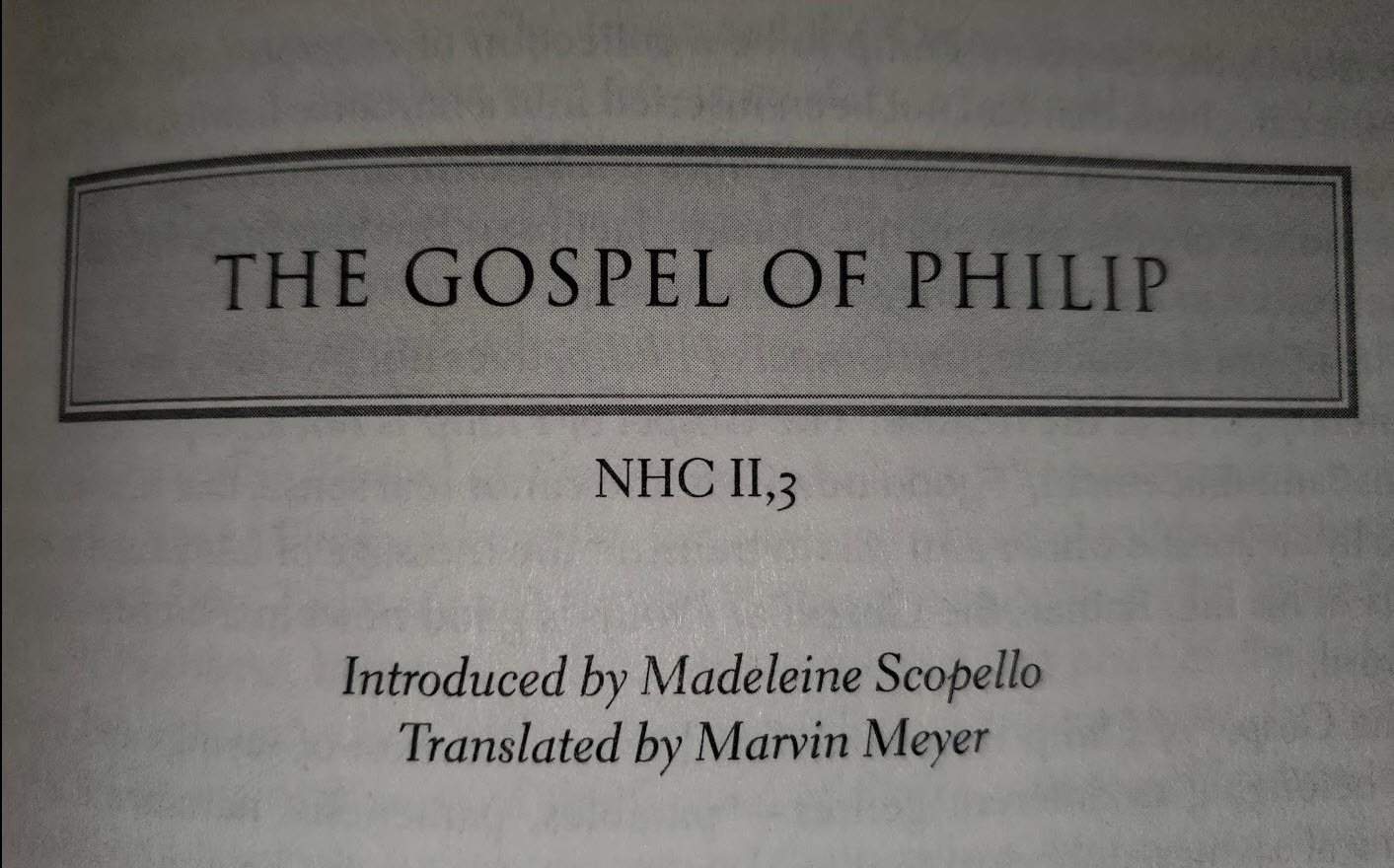
All quotes and references are from Marvin Meyer's excellent translation, found in the
Nag Hammadi Scriptures.
God is a Dyer
One metaphor reads:
"God is a dyer. Just as the good dyes, said to be genuine dyes, dissolve into what is dyed in them, so also those whom God dyes become immortal through his colors, for his dyes are immortal. And God dips those to be dipped in water."
In this text, probably written sometime in the second or third century, the act of baptism is akin to dying a cloth. If the cloth's colors are very strong on their own, only a very powerful dye will be able to change the color. Even if the dye is strong, it may not last if it's unable to cling to the fibers of the cloth.
Being baptized, then, is like being dipped into a dye. God's dyes are immortal-- they never fade. And-- here's the critical part-- just as a cloth dipped in red dye genuinely becomes red, a person dipped in God's immortal dye genuinely becomes immortal. Dyeing a garment changes its essential properties (a blue shirt becomes a purple shirt, for example), and the same is true for baptism!
The White Dye
A later section in the Gospel of Philip continues this line of reasoning:
The master went into the dye works of Levi, took seventy-two colored cloths, and threw them into a vat. He drew them out and they all were white. He said, "So the son of humanity has come as a dyer".
There's quite a bit packed into this brief section! While we're not going to discuss everything of significance (such as why the number "seventy-two" was selected or why "Levi" was referenced), we will touch on two:
First, who is it that is doing the dying? The "son of humanity", or the son of man. Jesus, here, is the one doing the dying. Second, what color are they dyed? They are dyed white. This suggests the key value of baptism, and shows its intrinsic paradox: to dye something white is to dye it with such purity that no darker color or hue shines forth.
Dye and the Gospel of Mark
The Gospel of Mark has a related section in Chapter 9, as found in the NRSV:
Six days later, Jesus took with him Peter and James and John, and led them up a high mountain apart, by themselves. And he was transfigured before them, and his clothes became dazzling white, such as no one on earth could bleach them.
During Christ's transfiguration, according to the author of Mark, his clothed became white-- so radiant that no mortal could bleach them, no mortal could dye them. For the author of the Gospel of Philip, who likely had access to other early Christian texts such as the Gospel of Mark, baptism is that which makes us like Christ-- that which makes us imperishable, in a way that only God can do.
Conclusion
The Gospel of Philip not only gives us a different perspective on baptism-- the metaphor of God as a dyer, and of the dye as being immortal-- but it also adds additional substance to a part of the Gospel of Mark. There is a lot more to say here, and if you're interested, I would recommend you
exploring it on your own!
Interested in learning more about baptism in the context of early Christian diversity? Maybe check out a Sethian baptismal hymn-- it's very different than anything you'll find in churches, today!